- Read offline
- Access all content
- Build a list of your own favourites
- Search the contents with full-text search functionality
- ... and more!


bergamotto
bergamot
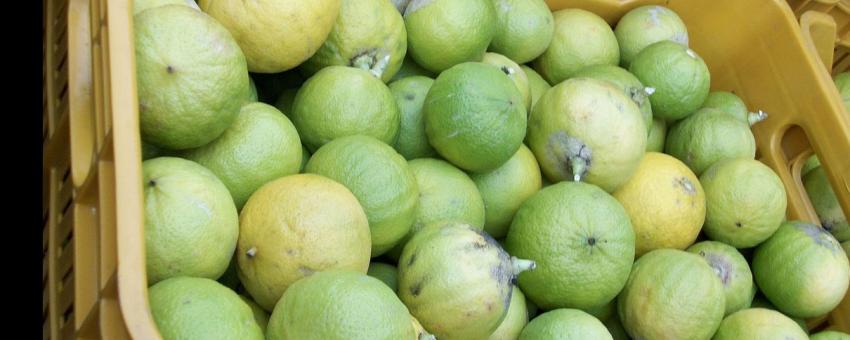
A difficult green or yellow citrus fruit the size of an orange, bergamots can be smooth or warty. Groves thrive in Calabria along the Straits of Messina then up along the Ionian coast as far as Gioia Marina, producing 90% of the world's bergamot crop. They grow three different cultivars: Feminello, Fantastico and Castagnaro, and are harvested in early November.
There are many theories about the it origins, but in generally is believed to be an cross between bitter orange and the Mediterranean sweet lemon (limetta) or perhaps the limethat naturally occurred sometime in the Middle Ages, thanks to the gentle breezes of Calabria’s microclimate.

Encouraged by interest in the budding perfume industry (bergamot oil is essential in ‘fixing’ scents, as well as adding a note of freshness) the oil was laboriously extracted in the mid 17th-century, by cutting the fruit in half, removing the pulp and twist sponges in the rind and skin to collect the oil, before squeezing it out. By 1844, the ‘Calabrian Machine’ was invented to extract the oil mechanically.

Images by Marcuscalabresus, Unknown authorUnknown author, zombieontheroad